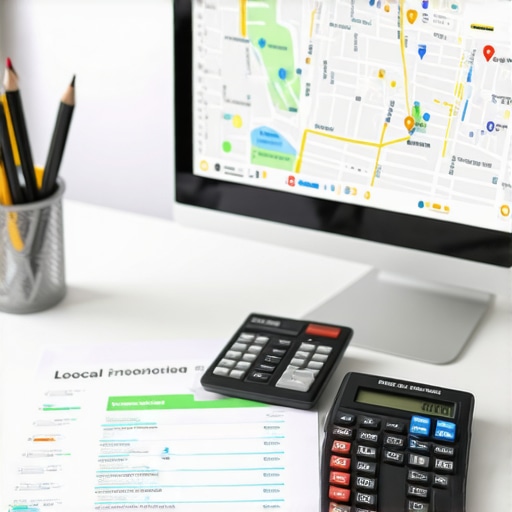
My First Encounter with Local SEO Budgeting
As someone who runs a small business, I always found it challenging to understand how much I should invest in local SEO. When I first started exploring options, I felt overwhelmed by the variety of packages and costs involved. My curiosity was piqued when I discovered the local SEO cost calculator. It seemed like a game-changer for someone like me trying to allocate my marketing budget wisely.
Why I Switched to Maps SEO Packages for Better Results
Initially, I thought local SEO was just about keyword stuffing and backlinks. But then I realized that maps SEO packages could significantly boost my visibility in Google Maps, which is crucial for local customers. These packages are tailored to enhance my business’s local presence without blowing my budget. I remember reading an article on best SEO budget tools that confirmed my suspicion: smart investments in local SEO can deliver measurable ROI.
How to Use an SEO Cost Calculator for Smarter Budgeting
Using the SEO cost calculator was surprisingly straightforward. I input my location, business type, and goals, and it provided an estimated cost for various packages. This tool helped me compare options and avoid overspending. For example, I learned that a basic local SEO plan could start as low as $300/month, but a comprehensive maps SEO package might be around $700/month—more aligned with my growth targets. Want to know more? Check out this guide on how to make the most of these calculators.
What I Wish I Knew Before Investing in Local SEO
Looking back, I wish I had a clearer understanding of the affordable SEO plans available and how they could be customized to my needs. There’s no one-size-fits-all, and often, a smaller investment can yield excellent results if targeted correctly. I also discovered that ongoing monitoring and adjustments are key, which is where local SEO tools become invaluable.
How Can I Ensure My Local SEO Investment Pays Off?
One way I’ve ensured success is by regularly reviewing my progress and working closely with SEO professionals who understand my niche. Also, I stay updated with strategies outlined in authoritative sources like Moz’s beginner’s guide to SEO. It’s a treasure trove of insights that help me make informed decisions.
If you’re considering boosting your local visibility, I encourage you to explore the various maps SEO packages. They are tailored for growth and cost-efficiency.
Have you tried any local SEO tools or packages? Share your experiences in the comments—I love learning from fellow entrepreneurs!
How Can Local SEO Strategies Be Fine-Tuned for Higher ROI?
One of the most compelling questions I often get from small business owners is how to fine-tune their local SEO efforts to maximize return on investment. It’s not just about throwing money at SEO but about strategic, data-driven adjustments that deliver measurable results. For example, leveraging detailed analytics from tools like local SEO cost calculators can reveal which keywords and packages yield the best conversions, enabling smarter budget allocations. Analyzing performance metrics regularly ensures that every dollar spent is contributing directly to increased foot traffic and online visibility.
Why Is Local Map Optimization Essential for Local Business Growth?
Local map SEO is often overlooked but remains crucial for hyper-local visibility. Optimizing your Google My Business listing, ensuring NAP consistency, and actively managing reviews can significantly enhance your presence in local searches. Studies show that over 70% of local consumers visit a store within five miles of their location, underscoring the importance of appearing prominently in map packs. Investing in specialized maps SEO packages can dramatically improve your chances of appearing at the top of local map results, translating into more in-store visits and calls. Curious about how to implement these strategies? Check out this comprehensive guide.

How Do External SEO Resources Strengthen Your Local Strategy?
External authoritative resources like Moz’s beginner’s guide to SEO provide invaluable insights that can refine your local SEO approach. They explain complex concepts in accessible language, helping entrepreneurs understand the nuances of search engine algorithms, local ranking factors, and content optimization. Integrating knowledge from such sources ensures your strategies remain aligned with the latest best practices and Google’s evolving algorithms, which is essential for sustained success.
What Practical Steps Can Small Business Owners Take Today to Boost Local SEO?
Start by auditing your current online presence—verify your NAP details across all platforms, optimize your Google My Business profile, and encourage satisfied customers to leave reviews. Next, focus on localized content creation, such as blog posts or landing pages targeting specific neighborhoods or services. Lastly, harness the power of local SEO tools like budget-friendly SEO tools to monitor progress and identify new opportunities. Remember, consistent effort and data-driven adjustments are key to turning local SEO into a reliable revenue generator.
Looking for more practical advice? Explore affordable SEO plans designed specifically for local businesses that want to maximize results without overspending. And if you’re interested in understanding the costs involved, don’t hesitate to use the local SEO cost calculator to tailor a plan to your budget.
Mastering the Art of Local SEO Budgeting: Personal Lessons and Deeper Insights
Reflecting on my journey with local SEO, I realize that the real challenge lies not just in choosing the right packages or tools, but in understanding the subtle intricacies that differentiate an average campaign from a highly successful one. Early on, I focused heavily on the surface—keywords, reviews, and Google My Business optimization. But as I gained more experience, I started to see how data analysis, competitor benchmarking, and even local content storytelling could dramatically amplify my results. This shift from a tactical to a strategic mindset has been pivotal in maximizing my ROI.
Why Do Nuanced Local SEO Strategies Matter More Than Ever?
In a world where local search results are increasingly personalized and competitive, small adjustments can lead to outsized gains. For instance, optimizing for voice search or rich snippets requires a deeper understanding of user intent and search engine algorithms. I recall a time when I tweaked my local landing pages to include structured data—an advanced technique I learned from authoritative sources like Moz’s beginner’s guide to SEO. The result? My visibility in local voice searches improved noticeably, leading to more calls and visits. It became clear that staying updated on algorithm changes and emerging trends is essential for staying ahead.
How Can Small Businesses Effectively Integrate Advanced Tactics Without Getting Overwhelmed?
One practical approach is to focus on incremental improvements—small, consistent adjustments that build over time. For example, regularly updating your NAP data, adding localized content, and experimenting with schema markup can compound into significant results. Leveraging analytics tools, like the local SEO cost calculator, helps identify which tactics yield the best ROI, enabling smarter resource allocation. I’ve found that dedicating a few hours each month to review performance metrics and competitor strategies can keep your efforts aligned with evolving search landscape.
What Are the Hidden Opportunities in Local Map Optimization?
Local map optimization often seems straightforward—claim your GMB listing, ensure consistency, gather reviews. But the real hidden gems involve leveraging user-generated content, optimizing for local landmarks, and capitalizing on local events or seasonal trends. These nuanced tactics can make your business stand out in crowded markets. I remember collaborating with local influencers and community organizations to create content that resonates with nearby audiences. Such authentic engagement not only boosts visibility but also fosters loyalty and trust. For more insights on advanced map optimization techniques, check out this comprehensive guide.
< >
>
How Do External Resources Elevate Your Local SEO Strategy?
External resources like Moz’s SEO guide or industry-specific case studies provide a wealth of knowledge that can refine your approach. From understanding local ranking factors to mastering content optimization, these authoritative sources help bridge the gap between basic tactics and innovative strategies. I’ve personally benefited from studying these materials, which inspired me to experiment with new techniques—such as hyper-localized landing pages and personalized review campaigns—that have yielded measurable improvements. Staying engaged with such resources ensures your strategies remain aligned with the latest best practices and algorithm updates.
What Practical Steps Can You Take Today to Deepen Your Local SEO Efforts?
Start by conducting a comprehensive audit of your current online presence—verify consistency across all directories, optimize your Google My Business profile, and engage actively with your community through reviews and local content. Then, explore advanced tactics like schema markup implementation and local backlink building. To monitor progress and identify new opportunities, leverage tools like the affordable SEO plans. Remember, the key to sustained success is continuous learning, testing, and adapting your tactics based on data-driven insights. I invite you to share your experiences or ask questions—your insights could help others navigate this complex yet rewarding landscape.
Leveraging Data-Driven Insights to Sharpen Your Local SEO Focus
One aspect I’ve come to appreciate deeply is the importance of harnessing granular analytics to refine my local SEO campaigns. Beyond basic tracking, I now delve into metrics such as user engagement, bounce rates on localized landing pages, and conversion paths. By integrating tools like local SEO cost calculators, I can identify which keywords or map features generate the highest foot traffic or calls, allowing me to reallocate budget toward high-impact areas. This continuous feedback loop transforms my approach from guesswork to precision targeting, elevating my ROI significantly.
The Power of Hyper-Local Content and Community Engagement
Another nuanced tactic that has proven effective involves creating hyper-local content tailored to specific neighborhoods or community events. For instance, I develop blog posts highlighting local landmarks, partnering with community influencers, or sponsoring neighborhood activities. This not only boosts my local relevance but also garners valuable backlinks and reviews. Engaging with local communities through social media and event participation fosters authentic relationships, which Google increasingly values in its local ranking algorithms. Incorporating these initiatives into my affordable SEO plans has helped me stand out amidst fierce competition.
How Can I Integrate Technical SEO and Map Optimization for Superior Results?
Technical SEO elements like schema markup, website speed, and NAP consistency are foundational but often underutilized in local strategies. Implementing schema for local businesses, such as LocalBusiness schema, enhances search engine understanding of my site’s relevance for local queries. Additionally, ensuring my website loads swiftly and is mobile-optimized ensures better user experience and higher rankings. Combining these with meticulous Google My Business optimization—accurate categories, high-quality photos, and prompt review responses—creates a synergy that elevates my map visibility. For a comprehensive understanding, I regularly consult resources like Moz’s beginner’s guide to SEO to stay updated on best practices.
What Are the Emerging Trends in Local Map SEO, and How Can Small Businesses Capitalize?
Emerging trends such as voice search optimization, the use of structured data, and local AI-driven personalization present exciting opportunities. Optimizing for voice commands requires natural language keywords and FAQs, which I’ve incorporated into my content. Structured data, especially schema markup, helps Google showcase my business in rich snippets, increasing visibility. Additionally, leveraging AI tools for local personalization allows me to customize offers and content based on user behavior and location, fostering loyalty. Staying ahead involves continuous experimentation and learning from authoritative sources like Moz. I invite fellow entrepreneurs to share their experiences with these innovative tactics and contribute to this evolving dialogue.
< >
>
Things I Wish I Knew Earlier (or You Might Find Surprising)
1. The Hidden Power of Data-Driven Decisions
When I first started investing in local SEO, I underestimated how much value detailed analytics could provide. It’s not just about rankings; understanding user behavior and conversion paths helped me optimize my budget effectively. Realizing this was a game-changer, allowing me to shift funds toward the most impactful strategies.
2. Local Content Can Be Your Secret Weapon
Creating hyper-local content tailored to community interests and landmarks proved to be more effective than generic strategies. It resonated with my audience and improved my local map rankings. Authentic engagement through local stories made my business stand out in a crowded marketplace.
3. Consistency Outweighs Perfection
I learned that regular updates, reviews, and profile optimizations are more valuable than trying to perfect every detail at once. Small, consistent efforts built momentum and gradually improved my visibility without draining my budget.
4. The Value of External Resources
Guides from authoritative sources like Moz or industry blogs provided insights that I couldn’t find elsewhere. They helped me understand emerging trends and avoid common pitfalls, making my investment in local SEO more strategic and less risky.
5. Even Small Businesses Can Compete
With the right strategies and tools, small local businesses can outrank larger competitors. I found that focusing on niche keywords and community engagement yielded surprising results, proving that budget-friendly SEO can deliver big wins.
Resources I’ve Come to Trust Over Time
- Moz’s Beginner’s Guide to SEO: This comprehensive resource demystified complex concepts and kept me updated with best practices. I recommend it to anyone serious about mastering local SEO.
- Google’s My Business Help Center: The official resource for optimizing GMB profiles. It’s invaluable for understanding what Google values in local listings.
- Local SEO Industry Blogs: Blogs like BrightLocal and Search Engine Journal offer practical tips and case studies that inspire new ideas and strategies.
Parting Thoughts from My Perspective
Mastering local SEO budgeting is less about finding a magic formula and more about understanding your unique audience and continuously refining your approach. From my experience, leveraging data, creating genuine local content, and staying informed through trusted resources can transform modest investments into remarkable results. If you’re ready to boost your local visibility without overspending, I encourage you to explore tools like local SEO cost calculators and consider tailored maps SEO packages that fit your needs. Remember, the journey is ongoing, but every step forward is worth it. If this resonated with you, I’d love to hear your thoughts—drop a comment or share your own experiences. Let’s grow together in this ever-evolving local SEO landscape!



This post really resonated with me, especially the part about using data-driven insights to optimize local SEO budgets. I started implementing regular analytics reviews after reading similar tips, and I’ve noticed better results from my Google My Business profile and local content strategies. One thing I’ve found helpful is tracking the performance of specific keywords and adjusting my approach based on those analytics. It’s amazing how small tweaks can make a significant difference in local visibility and customer engagement.
This article really hits home for me, especially with how you emphasized the importance of data analysis in local SEO. I’ve seen firsthand how regular review of analytics can uncover unexpected opportunities—like optimizing for high-converting keywords or identifying underperforming areas. One challenge I face is balancing the time between managing reviews, content creation, and technical SEO tweaks. Have others found effective ways to streamline these efforts? I also wonder about the best ways to leverage local events or seasonal trends to boost map visibility—any tips from seasoned entrepreneurs? I believe that integrating community engagement with these tactical SEO efforts can really amplify results, making small investments go further. It’s inspiring to see how continuous learning and adapting are key to staying ahead, especially in competitive local markets.
This post really highlights the importance of strategic investments in local SEO, especially for small businesses trying to maximize their ROI. I’ve personally found that holding regular reviews of my map and review strategies, combined with localized content, makes a tangible difference in visibility. Using tools like the local SEO cost calculator has helped me avoid overspending and target the most promising keywords. I am curious, how do others balance the time spent on content creation versus technical SEO optimizations? I’ve noticed that tech improvements, like schema marking up local business details, often deliver quick wins, but consistent fresh content keeps the engagement going. Have you experimented with seasonal or event-based local campaigns, and what results have you seen? It seems that blending data-driven adjustments with community-focused tactics creates a powerful synergy for boosting local map rankings.
I really appreciated the in-depth insights shared in this article about local SEO budgeting. The emphasis on moving beyond surface-level tactics like keywords and reviews to more strategic, data-driven methods resonates with my experience. I’ve found that consistent monitoring with tools like Google Analytics and local SEO-specific platforms allows me to identify which efforts truly drive traffic and conversions. Also, the idea of leveraging hyper-local content and community engagement strikes a chord; authentic local stories often outperform generic campaigns in my niche. One challenge I’ve encountered is balancing the time between content creation and technical SEO fixes, especially with limited resources. How do others prioritize tasks effectively? Do you find that focusing on technical improvements or content development yields quicker returns in your local markets? I believe that integrating these strategies with ongoing analytics is key to maximizing ROI in local SEO.
I really resonate with this discussion about the balance between technical SEO and content creation. In my experience managing a local bakery, I’ve found that simple technical tweaks like ensuring NAP consistency and optimizing images for speed can provide quick wins on Google Maps, which boosted our visibility significantly. However, consistently creating engaging, locally relevant content—such as highlighting community events or story features—has strengthened our brand loyalty and brought in repeat customers. I’m curious, how do other local businesses prioritize their efforts when resources are limited? Do you find that focusing on technical improvements first, or developing a content strategy, yields faster results? For small businesses, I believe adopting a phased approach—quick technical fixes with ongoing content engagement—can be the most effective method. Looking forward to hearing insights from fellow entrepreneurs on balancing these essential aspects!
Reading through this comprehensive post really made me reflect on my own local SEO efforts. I’ve found that while investing in maps SEO packages does improve visibility, consistency across all local listings is crucial for sustaining that growth. I started focusing more on regular review of my Google My Business insights, which provided surprising data on what my customers are actually searching for and responding to. Since then, I’ve tweaked my keywords and added more localized content, which has noticeably increased my store visits. My question is, how do you all balance the quick wins from technical fixes like schema markup with long-term content strategies? Do you find one more effective than the other, or is the secret really in blending both? I believe that ongoing learning, like reading authoritative sources such as Moz’s guides, is key to staying updated with the latest trends in local SEO strategies.
I really appreciated this detailed discussion about local SEO budgeting and tactical strategies. In my experience running a boutique in a competitive neighborhood, I’ve found that minor technical adjustments—like optimizing NAP consistency and implementing schema markup—can provide quick visibility boosts. However, the real long-term gains come from creating authentic, locally relevant content and engaging actively with the community. I’ve noticed that fostering relationships with local influencers and participating in community events significantly boosts our local footprint. Balancing technical and content efforts can be challenging with limited resources. How do others prioritize these tasks to maximize ROI without spreading yourselves too thin? Also, do you think focusing more on community engagement yields better long-term results compared to technical fixes? I’d love to hear different approaches from fellow entrepreneurs who’ve managed to find the sweet spot. Thanks for sharing such a comprehensive guide—really helps clarify the path to smarter local SEO investments.
This post really sheds light on how vital it is for small businesses to understand and manage their local SEO budgets effectively. I’ve experienced firsthand how using tools like the local SEO cost calculator can simplify what once felt overwhelming, helping us focus efforts where they matter most. It’s interesting how the shift from superficial tactics like keyword stuffing to more strategic map SEO packages can make such a difference in visibility. I particularly appreciate the mention of continuous monitoring and adjustments, which often get overlooked but are crucial for sustained growth. I’m curious, how do others balance their focus between optimizing for local search and maintaining a strong online review presence? Investing in the right mix seems key to maximizing ROI without stretching resources too thin.