
My Journey Into Local SEO and Budgeting Magic
When I first dipped my toes into local SEO, I was overwhelmed by the sheer number of factors influencing my visibility. I remember spending countless hours trying to estimate costs for different strategies, only to realize I lacked a clear way to measure my ROI effectively. That’s when I stumbled upon the power of SEO cost calculators and budget tools—game changers in my digital marketing journey.
Unlocking the Potential of SEO Cost Calculators for Smarter Budgeting
Using an SEO cost calculator helped me gain clarity on where my money was going. These tools allow you to input your goals, local market data, and available resources, giving you a detailed breakdown of potential expenses. I found that integrating these calculators with my existing Google Analytics data helped me refine my budget, ensuring I invested in strategies that truly moved the needle.
Decoding Local SEO Pricing Strategies for 2025 Success
One thing I learned from exploring local SEO pricing strategies is that understanding market rates is crucial. It’s tempting to go for the cheapest options, but investing in quality maps SEO packages and local optimization can deliver a higher ROI. I’ve seen firsthand how tailored packages, like those described in maps SEO packages, can boost local visibility without breaking the bank.
How Do I Choose the Best Budget Tools for My Business?
What makes a budget tool truly effective for local SEO?
In my experience, the best tools are intuitive, provide actionable insights, and are adaptable to your specific niche. I recommend exploring options like best SEO budget tools that are designed for small businesses. They help you allocate your resources efficiently, track progress, and pivot strategies when necessary. Remember, the goal isn’t just to save costs but to maximize your visibility and conversions.
If you’re serious about local SEO success, I encourage you to experiment with different tools and share your experiences. It’s amazing how a well-planned budget, guided by the right tools, can transform your local digital presence. Need further assistance? Feel free to reach out for personalized advice.
How Can Advanced Budget Tools Elevate Your Local SEO Strategy?
Leveraging sophisticated tools is essential for any local business aiming to optimize their SEO investments. Modern SEO budget tools not only help you allocate resources efficiently but also provide predictive insights that can shape your long-term strategy. These tools integrate seamlessly with platforms like Google Analytics, offering a comprehensive view of your campaign performance and budget efficiency.
The Nuanced Role of Local SEO Pricing for 2025 Success
Understanding the intricacies of local SEO pricing is like decoding a complex puzzle. The key isn’t just in finding the cheapest options but in understanding what quality services are worth your investment. For instance, customized maps SEO packages can dramatically improve your local rankings, especially when aligned with your specific geographic and demographic targets. Such strategic investments ensure your budget is not just spent but strategically invested for maximum ROI.
What Should Experts Consider When Selecting Local SEO Budget Tools?
How do top-tier tools balance usability and depth of insights?
In my experience, effective tools strike a delicate balance between user-friendliness and rich data provision. They should be intuitive enough for quick decision-making yet comprehensive enough to reveal detailed performance metrics. Exploring options like maps SEO packages and cost calculators can help identify opportunities for growth while keeping costs in check. Practical tools also allow for scenario testing, enabling you to simulate different budgeting approaches and their potential outcomes.

Are There Hidden Costs or Pitfalls in Local SEO Budgeting?
Absolutely. Over-investing in low-quality services can drain your budget without tangible results. Conversely, under-investing might leave you invisible in your local market. This is why transparency in pricing and understanding service scope are crucial. Trusted sources like these calculators and packages help ensure you’re making informed decisions. Additionally, regular audits and performance reviews are vital to identify waste and optimize your spend continually.
How Can You Incorporate Practical Strategies to Maximize ROI?
Implementing a data-driven approach is fundamental. Regularly reviewing your local SEO metrics, adjusting your budgets based on performance, and testing different strategies can significantly improve your results. For example, investing in Google My Business optimization and local citation building can yield quick wins. Combining these tactics with detailed budgeting and tracking using the right tools ensures your investments are aligned with your goals.
Feeling inspired to refine your local SEO budget? Share your experiences or ask questions below. If you’re eager to explore more about SEO strategies tailored to your needs, check out our affordable SEO plans designed to maximize local visibility and ROI.
Beyond Basic Budgeting: Embracing Complexity for Local SEO Triumph
As I delved deeper into the nuances of local SEO budgeting, I realized that simple tools and formulas only scratch the surface of what it takes to truly optimize your investments. The landscape is becoming more sophisticated, demanding a strategic approach that accounts for market fluctuations, seasonal trends, and the unpredictable nature of consumer behavior. This complexity initially overwhelmed me, but gradually, I learned to leverage advanced analytics and scenario planning to stay ahead. Using top-tier SEO budget tools enabled me to simulate different investment scenarios, ensuring my strategy was resilient against market shifts.
How Do I Integrate Long-Term Vision into Short-Term Budget Adjustments?
One question that constantly challenged me was balancing immediate wins with sustainable growth. Short-term tactics might yield quick results, but without a long-term vision, those gains can be fleeting. I found that integrating a multi-year roadmap—using detailed projections and ongoing performance metrics—helped me make smarter, more aligned decisions. For instance, dedicating a portion of my budget to content quality improvements and local link-building, even if they don’t pay off instantly, set the stage for exponential growth in subsequent quarters. This approach aligns with insights from local SEO pricing strategies that emphasize value over cost alone.
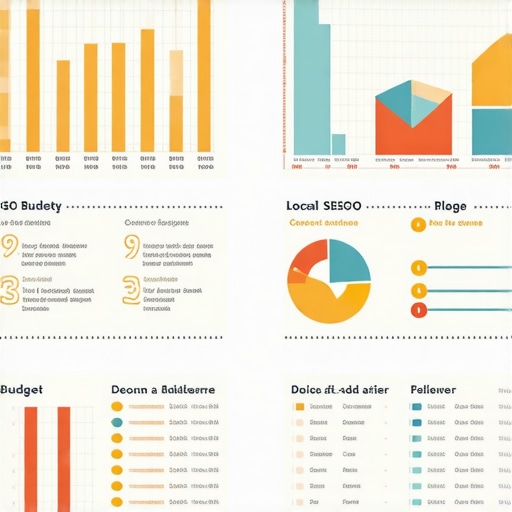
Visualizing the interconnectedness of your budget, strategy, and results can be transformative. An insightful diagram or chart illustrating how different budget allocations impact various SEO channels over time can be a game-changer. It helps translate complex data into actionable decisions, making the abstract more tangible and manageable. If you’re interested in creating your own visual strategy maps, exploring tools like local SEO visualization tools can provide a significant edge.
What Are the Hidden Nuances in Balancing Cost and Quality?
One of the most subtle yet impactful lessons I learned is that not all high-priced services guarantee superior results. Conversely, ultra-cheap options often come with hidden costs—like poor execution or lack of customization—that can drain your budget in the long run. This delicate balance requires a nuanced understanding of service scope, vendor credibility, and expected ROI. For example, investing in maps SEO packages tailored to your niche can deliver measurable improvements without unnecessary expenses. Regular performance audits and transparent communication with providers are essential practices to avoid costly pitfalls.
How Can I Leverage Data for Continual Optimization?
Data-driven decision-making has become my cornerstone. By continuously monitoring performance metrics through platforms like Google Analytics and SEO-specific tools, I can identify underperforming areas and reallocate budgets dynamically. Implementing monthly review cycles helps keep my strategy agile, allowing me to capitalize on emerging opportunities or cut losses quickly. For example, if local citations are underperforming, investing more in citation-building or review management can yield quick improvements. Sharing your experiences and challenges in this area can foster valuable insights—so I encourage you to comment below or reach out via our contact page.
Leveraging Predictive Analytics for Future-Proof Local SEO Budgets
In my experience, integrating predictive analytics into your local SEO budgeting process transforms reactive strategies into proactive ones. By analyzing historical data and market trends, I’ve been able to forecast seasonal fluctuations and consumer behavior shifts, allowing me to allocate resources more effectively. Tools like advanced SEO budget tools provide forecasting modules that help anticipate traffic spikes and downturns, ensuring your investments are resilient and adaptable. This forward-looking approach not only safeguards your campaigns against unforeseen market changes but also positions your business for sustained growth over multiple fiscal periods.
Integrating Long-Term Content Strategies with Short-Term Budget Tactics
Aligning immediate campaign needs with a long-term content roadmap is crucial for sustainable success. I’ve found that dedicating a portion of my monthly budget to high-quality, locally relevant content creation—like blog posts, videos, and community-focused initiatives—sets the foundation for ongoing visibility. This strategy complements short-term tactics such as local citation updates or GMB optimizations, creating a synergistic effect that enhances overall ROI. According to recent industry insights, a well-balanced approach ensures that quick wins do not overshadow the importance of establishing authority and trust within your local niche (see more about local SEO pricing strategies). Demonstrating this integrated approach has helped me achieve both immediate and long-term growth, especially when supported by robust analytics.
How Can I Fine-Tune My Budget Allocation for Multi-Channel Local SEO Campaigns?
Optimizing budget distribution across multiple channels—such as Google My Business, local citations, review management, and maps SEO—requires a nuanced understanding of each element’s impact on visibility and conversions. I regularly analyze performance metrics to identify underperforming channels and reallocate funds accordingly. For instance, if my citation building efforts are yielding diminishing returns, I shift focus toward review acquisition or map optimization. This dynamic reallocation is facilitated by comprehensive tools like maps SEO packages that provide real-time insights. Remember, the goal isn’t just cost-cutting but strategic investment—leveraging data to maximize each dollar’s impact. I encourage you to experiment with different allocations, document outcomes, and share your insights, fostering a community of continuous improvement.
Addressing Hidden Costs and Quality Pitfalls in Local SEO Investments
One of the more subtle challenges I faced was discerning the true value behind seemingly affordable services. Low-cost providers often mask hidden expenses—such as subpar content, poor link quality, or incomplete optimization—which can backfire and inflate your overall costs. To mitigate this, I prioritize transparency and vendor credibility, thoroughly vetting service scopes before committing. Regular performance audits, coupled with transparent communication, help prevent budget leakage and ensure quality standards are met. Industry research confirms that investing in tailored maps SEO packages, designed specifically for your niche and geographic area, provides a measurable ROI without unnecessary expenditure (see more on cost-effective optimization). This disciplined approach to vendor selection and ongoing review safeguards your budget against pitfalls and positions your campaigns for long-term success.
Harnessing Data for Continual Optimization and Strategic Refinement
My most valuable insight has been the relentless use of data to refine and adapt my local SEO strategies. By establishing regular review cycles—monthly or quarterly—I’ve been able to identify which tactics yield the highest ROI and which need reevaluation. For example, if I notice a dip in local map rankings, I increase investment in review management and local citations, supported by detailed analytics from tools like cost calculators and analytics platforms. This data-driven approach fosters agility, enabling me to pivot swiftly and allocate resources more effectively. As the local SEO landscape becomes increasingly complex, leveraging granular data insights is no longer optional but essential for maintaining a competitive edge. If you’re eager to dive deeper into these advanced tactics, I invite you to share your experiences and questions—let’s learn and grow together in mastering local SEO budget mastery.
Things I Wish I Knew Earlier (or You Might Find Surprising)
The Hidden Power of Market Rates
One thing I discovered late in my SEO journey is that understanding local market rates can make or break your budget. Initially, I thought opting for the cheapest services would save me money, but I quickly realized that quality services often come at a fair price. Knowing what others pay for maps SEO packages helped me avoid overpaying and underinvesting at the same time.
The Myth of Quick Wins
I used to believe that spending more on aggressive local SEO tactics would lead to instant results. Turns out, sustainable growth requires patience and strategic budget allocation over time. This insight prevented me from wasting money on fleeting tactics that didn’t deliver long-term value.
The Real Cost of Low-Quality Services
Early on, I underestimated how much poor-quality SEO work could cost me. It’s not just about the money spent but also the lost visibility and trust. Regular performance reviews and vetting vendors helped me avoid this trap, ensuring my investments paid off.
The Value of Data-Driven Decisions
Relying on gut feeling was a mistake. Now, I use analytics and detailed budget tools to guide my decisions. This approach makes my spending more predictable and aligned with actual results, saving me from unnecessary expenses.
Long-Term Planning Is Key
Focusing solely on immediate results can be tempting, but my experience shows that integrating a long-term vision into my budget helps build a resilient SEO strategy. It’s about balancing quick wins with steady, sustained growth.
Resources I’ve Come to Trust Over Time
- Google Analytics: An essential tool for tracking real results and understanding what’s working. I recommend it to anyone serious about data-driven SEO.
- SEMrush: Their comprehensive platform deepened my understanding of competitive landscape and keyword opportunities, making my budgeting smarter.
- Backlinko Blog: Brian Dean’s insights helped me grasp the nuances of quality link-building and its costs, guiding my investments.
- Local SEO Guides from Moz: Reliable and well-researched, these guides helped me refine my local SEO strategy and avoid costly mistakes.
Parting Thoughts from My Perspective
Mastering local SEO budgeting isn’t about finding the cheapest options but about making informed, strategic choices. Understanding market rates, leveraging data, and planning for the long term have transformed my approach and results. If this resonates with you, I’d love to hear your thoughts or experiences—sharing knowledge is how we all grow. Feel free to share this with someone who might find it helpful or drop a comment below to start a conversation. Remember, the right budget, guided by real insights, can unlock the full potential of your local SEO efforts.


![Why Most 2026 SEO Cost Calculators Fail Your Business [Fix]](https://localseocostpro.com/wp-content/uploads/2026/01/Why-Most-2026-SEO-Cost-Calculators-Fail-Your-Business-Fix.jpeg)